Choosing a Petrol Generator: Ask How Long One Tank Lasts
Similar petrol generators can run 2.4 hours or 8 hours per tank. How to choose by runtime and real load, plus the carbon monoxide safety rules that matter most.
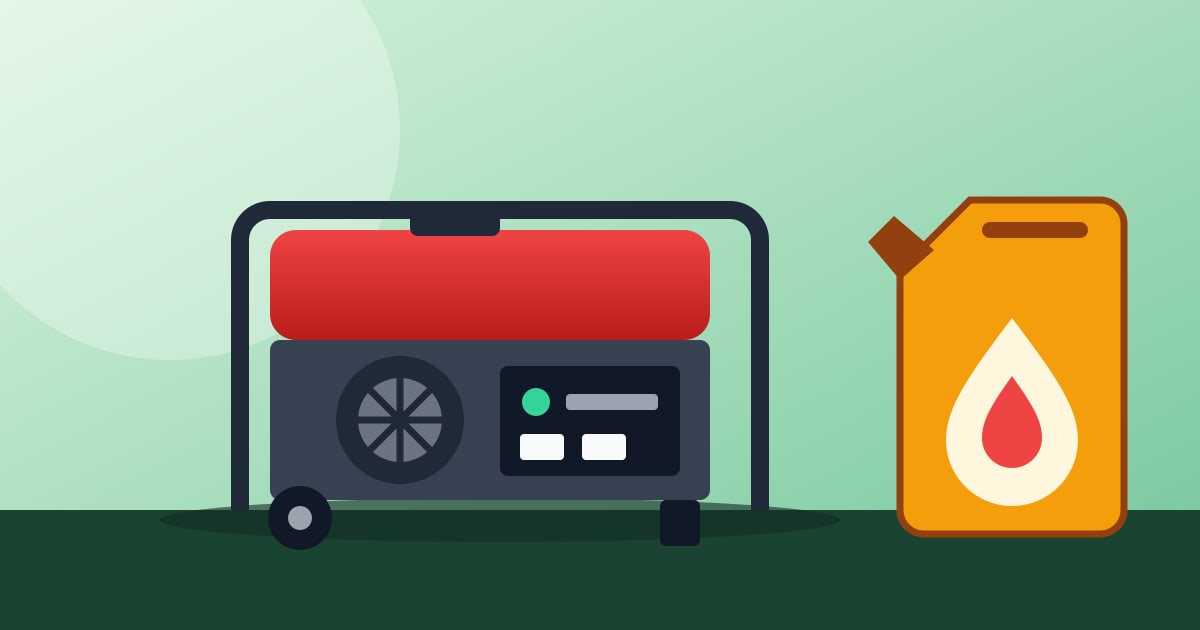
Most people buying a petrol generator ask about capacity and price. The third question tends to surface only during the first night-time blackout: on a full tank, how long will this thing keep going?
Runtime can differ by more than three times
The table below is a simple estimate: liters in the tank divided by the fuel the machine burns each hour. Actual results shift with the load.
| Model | Capacity | Tank | Consumption | Approx. runtime |
|---|---|---|---|---|
| FA3000P | 2.3 kVA | 13 L | 1.6 L/h | 8 hours |
| HK4500 | 3 kVA | 7.3 L | 1.9 L/h | 3.8 hours |
| HK7500 | 5.6 kVA | 7.3 L | 3 L/h | 2.4 hours |
| HK16000SDX MT | 10 kVA | 25 L | 6.4 – 7.3 L/h | 3.4 – 3.9 hours |
If your area tends to lose power overnight, the FA3000P may be easier to live with despite its small output. If you need to carry a heavier load for a short time, the HK7500 fits better, provided you have a safe refueling plan.
Match the machine to what you will run
A few essentials. Lights, fans, Wi-Fi and a fridge rarely call for a big machine. The 2.3 to 3 kVA group is a reasonable place to begin.
Adding air conditioning. Compressors pull a higher current when starting than when running, so look at 5 kVA models such as the FA6500X or EZ6500CXS. A 5 kVA set will usually handle basic appliances plus one small air conditioner, depending on what starts at the same moment.
Needing more power. The 10 kVA class comes as an open frame or as the quieter HK16000SDX GT, worth considering when neighbors are close. For small three-phase equipment, the HK16000TDX OP 12.5 kVA supplies 220/380V. This article explains when you need a three-phase generator.
Once demand reaches about 15 kVA, or the machine must run for long stretches every day, compare it against a diesel generator, since diesel usually burns less fuel to produce the same kWh.
Size it in three steps
- Add up the nameplate power of everything that will be on at the same time.
- Include the starting demand of the largest motor, usually an air conditioner or pump.
- Leave a further 20 to 30% so the machine does not run at its limit.
Detailed examples for homes are on the home generator page.
Safety: the part you cannot skip
Carbon monoxide in generator exhaust is the greatest danger, because you can neither see nor smell it and it can kill. Following CDC guidance, keep five habits:
- A garage, closed room or basement is never a place for a generator. Opening every door is still not safe enough.
- Keep the machine outdoors, more than 6 meters (20 feet) from walls and every opening.
- Mount a battery-powered CO alarm near the bedrooms.
- Refuel only after the engine is off and fully cool, and store petrol away from flames.
- To connect to household wiring, use an ATS or transfer switch so power cannot flow back into the grid.
Sources
Figures are checked against the sources cited in the article.