The $2.4 Billion Generac-Amazon Deal and Lessons on Backup Power
Generac will deliver a first $2.4 billion batch of generators to Amazon in 2027-2028. What can businesses in Vietnam learn about designing backup power?
The first batch alone is worth $2.4 billion, and that covers only deliveries in 2027 and 2028. The long-term supply agreement between Generac and Amazon, disclosed in Generac's third-quarter report on 28 October 2026, shows how backup generators have become a strategic item for data centers.
The numbers worth noting
Following this deal and other contracts, Chairman and CEO Aaron Jagdfeld said Generac's backlog for the data center market has grown to roughly $4.5 billion. The company is continuing the manufacturing expansion it announced earlier.
Third-quarter results reflect the same trend, with commercial and industrial sales growing about three times as fast as residential:
| Metric | Q3 2025 | Q3 2026 | Change |
|---|---|---|---|
| Net sales | $1.11 billion | $1.29 billion | |
| Commercial and Industrial | $432 million | $552 million | About +28% |
| Residential | $682 million | $743 million | About +9% |
Why does a data center need so many generators?
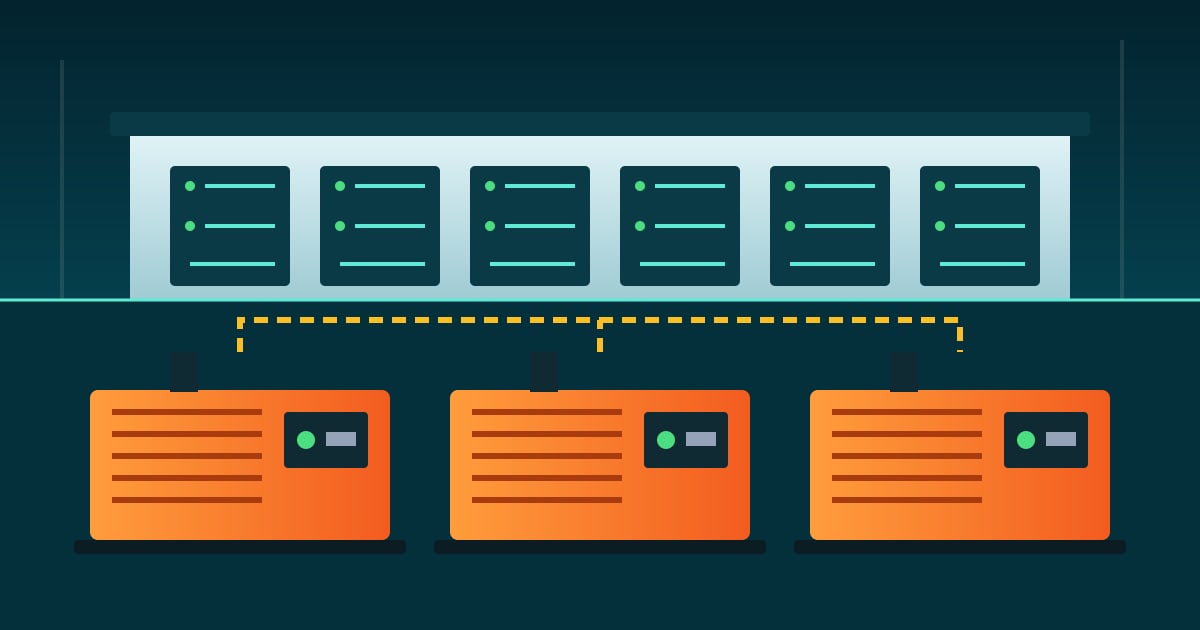
Power protection here works in two layers. When the grid fails, UPS batteries hold the load instantly, but only for a short time. The generators then start, take over and keep everything running until utility power returns. Without either layer, servers are at risk of going down. As a result, each new data center tends to bring substantial demand for high-capacity machines.
Applying this at a smaller scale
This section is our editorial opinion. A factory in Binh Duong or a provincial hospital does not need a system like Amazon's, but the design thinking transfers well.
Classify your loads before buying anything. Sort equipment into three groups: must never lose power, can tolerate a few tens of seconds of interruption, and can wait. That list drives both capacity and configuration.
Use two layers for sensitive equipment. Server rooms, medical devices and production lines that are easily damaged by a power loss should have a UPS ahead of the generator, carrying the load for the seconds or minutes until the set picks it up.
Choose the rating from real running hours. A machine that runs only during outages and one that runs daily need different specifications. Read how Prime and Standby power differ before you compare quotations.
Plan the generator location from day one. Sound attenuation, ventilation, exhaust routing and the fuel tank are very hard to fix once a building is finished. You can look at design, consulting and installation services while the project is still on the drawing board.
Test it like you mean it. A backup system proves its worth only when the transfer works under real load, so build regular load tests into your maintenance routine instead of waiting for the first genuine outage to find out.
Once your needs are clear, the range of industrial generators is a practical place to start matching capacity and configuration.
Sources
Figures are checked against the sources cited in the article.